Beanbag – what is it?
It is a bag filled with loose material that allows us to adjust the angle of our shots. Taken literally, we could think of this prop as a ‘bag of beans’. However, it is more commonly filled with rice or other pulses.
A rice tripod is, quite simply, a bag filled with rice. It isn’t filled to the brim, so you can mould it slightly. And that’s important. When you place your camera on a rice tripod, it sinks into the rice, and you can easily adjust its position – the tripod is malleable. Similarly, the tripod adapts to any uneven surface you place it on. Without having to search for bits of stone or twigs, or resort to the risky method of propping it up with a lens cap, you can position your camera level even on a sloping wall. What’s more, the bag is made of soft material, so you’ll prevent your camera from getting scratched. Despite its flexibility, the rice tripod is surprisingly stable.
You can also fill the tripod with lentils, peas and other pulses, but I recommend using rice. This is because the grains are a suitable size, and their shape helps to mould the bag. You can also use plastic granules (a raw material for manufacturing plastic products) if you can get hold of them. The advantage of a plastic filling is its durability. If a traditional rice tripod filled with rice, pulses or something edible gets damp (a risk especially when used outdoors), you’ll need to dry it out quickly. Otherwise, at best it will sprout, at worst it will go mouldy – and in the very worst case, it will be forgotten in a camera bag tucked away in a cupboard. With plastic-filled bags, there’s no such risk and the filling doesn’t need to be replaced. On the other hand, a rice tripod filled with food can, in a real emergency, be cooked and eaten.
(Rice tripod | FotoAparát.cz. Home page | FotoAparát.cz [online]. Copyright © 2021 FotoAparát.cz [accessed 5 April 2021]. Available from: https://www.fotoaparat.cz/clanek/888/ryzovy-stativ-10932/)
My very own beanbag
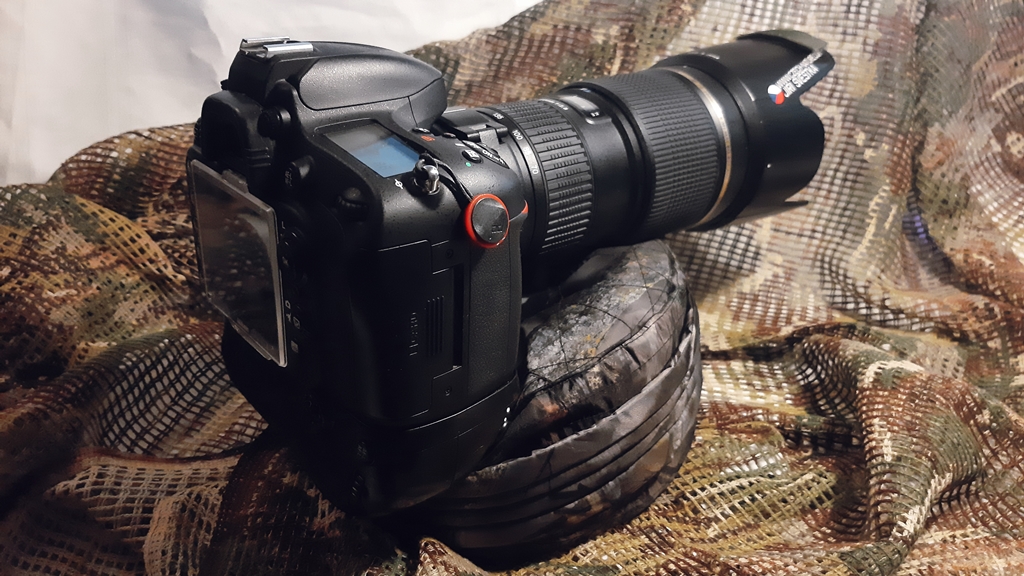
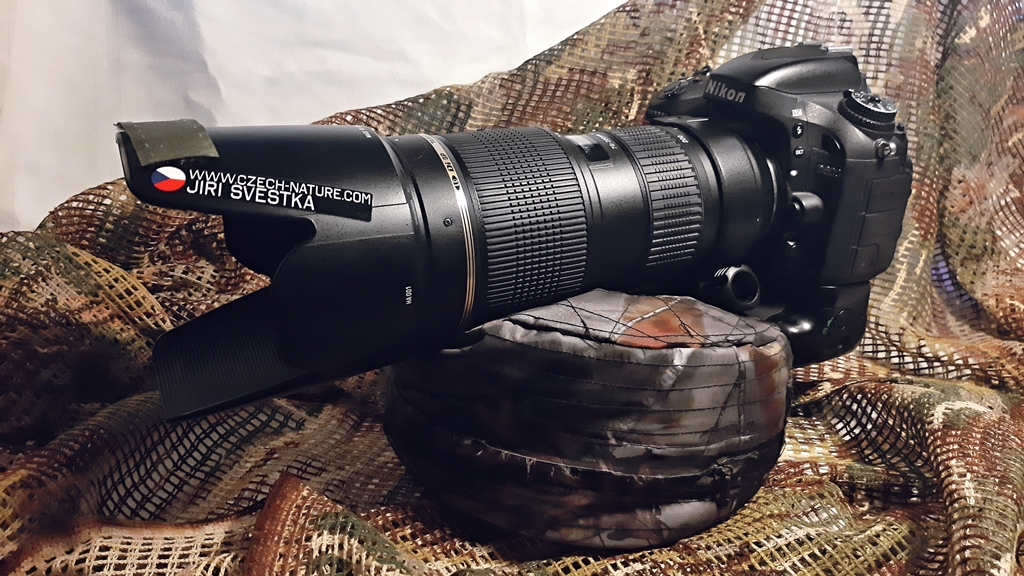
I wanted to use this accessory because I take a lot of photos from ground level. At the same time, I needed a mat that would be lightweight yet stable enough. I opted for the round BeanBag. It’s unusual. Nevertheless, it works perfectly well and does the job. The filling goes into an inner pouch, which is easy to fill. On the back of the BeanBag there’s a strap which can be used to attach it to a camera rucksack, for example. The BeanBag’s cover is made from durable material. I’ve also tested the BeanBag and found it comfortable to sit on. It can also be used, for example, as a soft pillow under your head in a tent.
My own BeanBag consists of two parts: the outer cover and the inner filling. The filling is removed from the cover through a zipped opening on the side of the Bag.
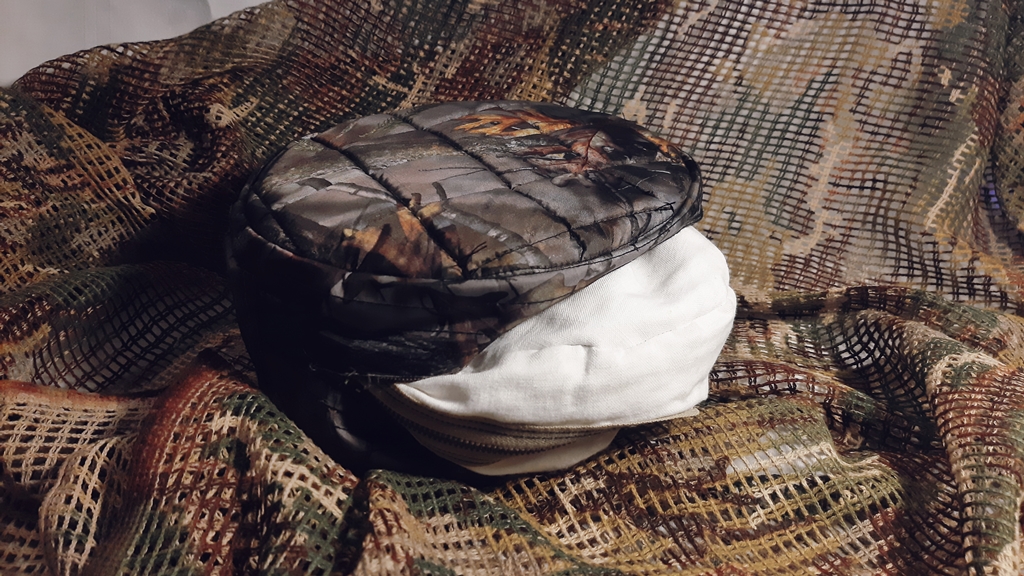
In this photograph, you can see both parts of the BeanBag. The inner liner also has a zip-fastened opening. This means I can change, top up or reduce the filling.
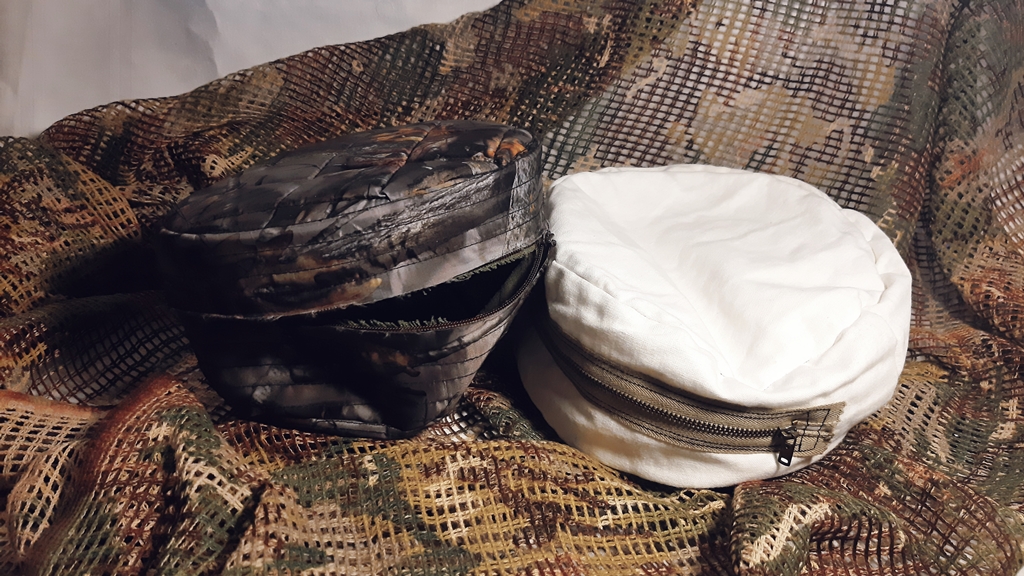
My own invention is a filling made of polystyrene beads. They work in exactly the same way as a rice filling and are incomparably lighter. Another advantage is that they are water-resistant.
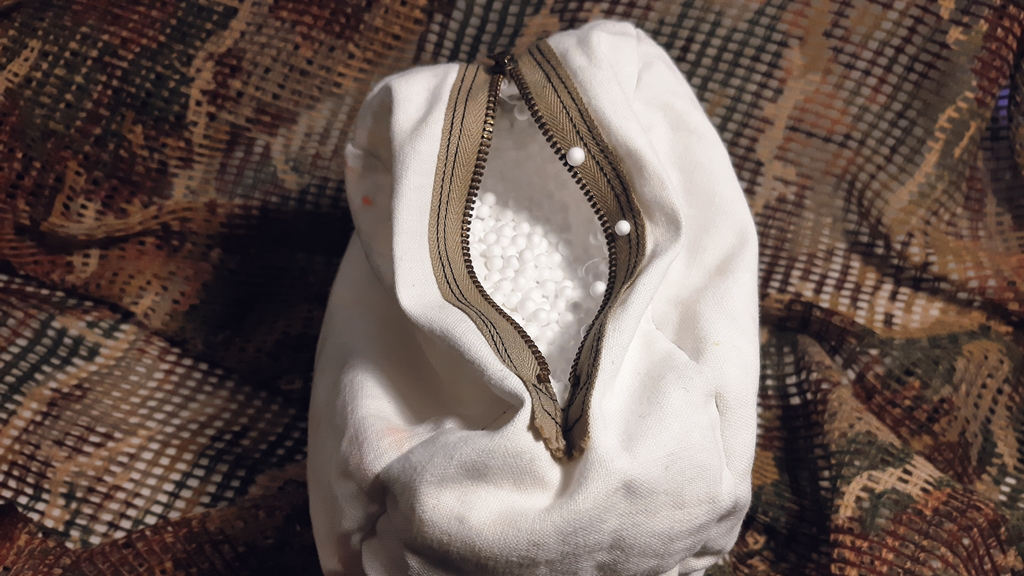
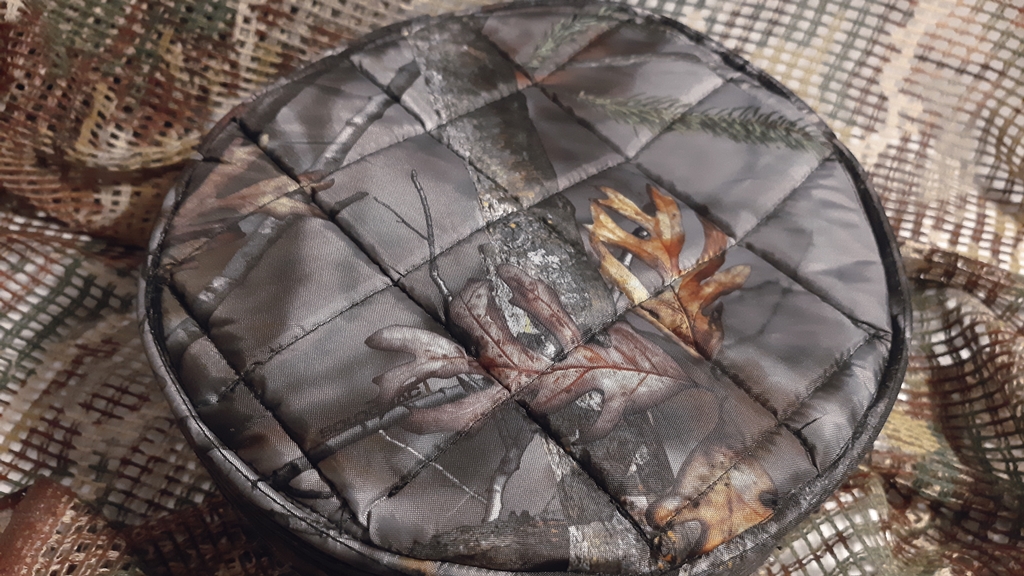
The upper part of the BeanBag consists of two layers of waterproof fabric, with foam filling sewn between them.
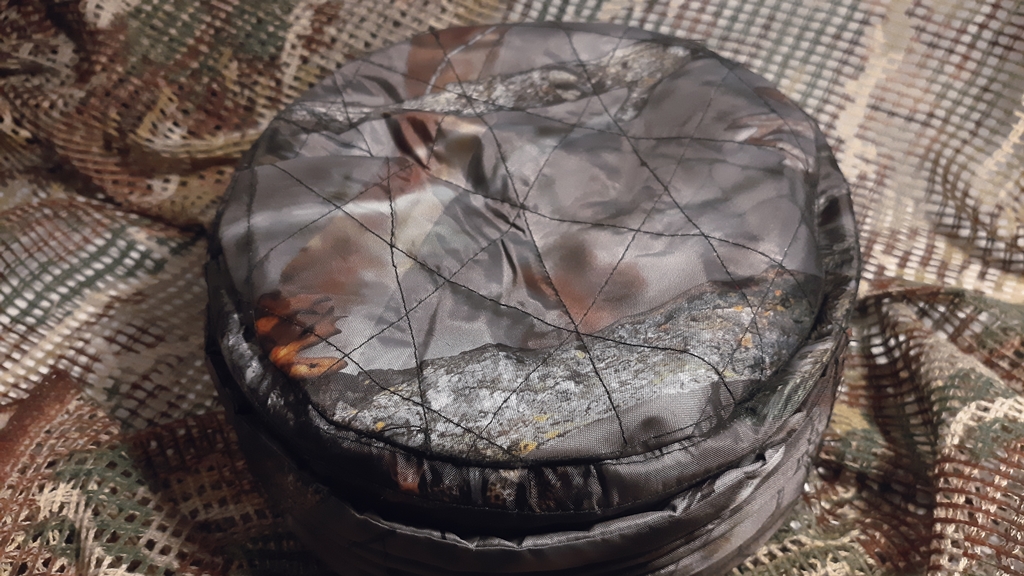
The lower part consists of three layers of waterproof fabric, thoroughly stitched together.
On the side, you’ll also find a strap, again made from waterproof fabric. It’s designed to attach the bag to a belt, rucksack, etc.
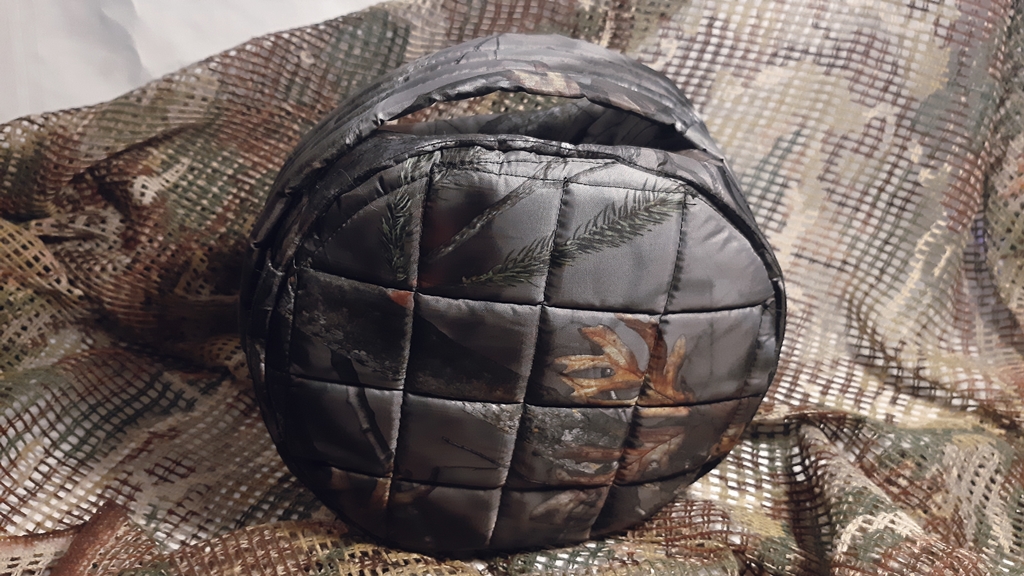
In the last photograph, you can see the BeanBag loaded with a Nikon D600 and a Tamron 70–200. This set weighs 2,180 grams. I also use it with a Nikon D600 and a Tamron 150–600, which weighs 2,801 grams.